
Cambridge Housing Reform: What Boston Homebuyers Need to Know

If you’re thinking about moving to Cambridge or Greater Boston, there’s a major housing story worth watching. Cambridge adopted one of the most ambitious zoning reforms in the country in February 2025, opening residential neighborhoods citywide to multifamily housing. Now, just 17 months later, new projects are beginning to appear on streets that have seen little development in decades and the changes are generating plenty of conversation.
For buyers relocating to Boston, this isn’t simply a zoning story. It’s about future housing supply, neighborhood character, affordability, and how communities across Greater Boston may evolve.
How Cambridge’s Housing Reform Began
Cambridge has always been one of Greater Boston’s most desirable—and difficult—housing markets to enter. Home to Harvard University, MIT, major biotech and technology employers, and highly walkable neighborhoods, demand for housing has remained strong while available land is extremely limited.
In February 2025, the Cambridge City Council approved a sweeping zoning overhaul designed to make it easier to create more housing throughout the city. For the first time in Cambridge zoning history, multifamily housing became permitted throughout residential neighborhoods rather than being restricted in certain areas.
Under the new rules, residential buildings can generally reach four stories. Buildings can reach six stories on qualifying lots when they meet Cambridge’s inclusionary housing requirements, including dedicating 20% of residential space to income-restricted affordable housing. The reform also eliminated certain minimum lot-size, unit-count, and residential floor-area restrictions.
The goal was straightforward: remove barriers to creating housing in a city where demand consistently exceeds supply.
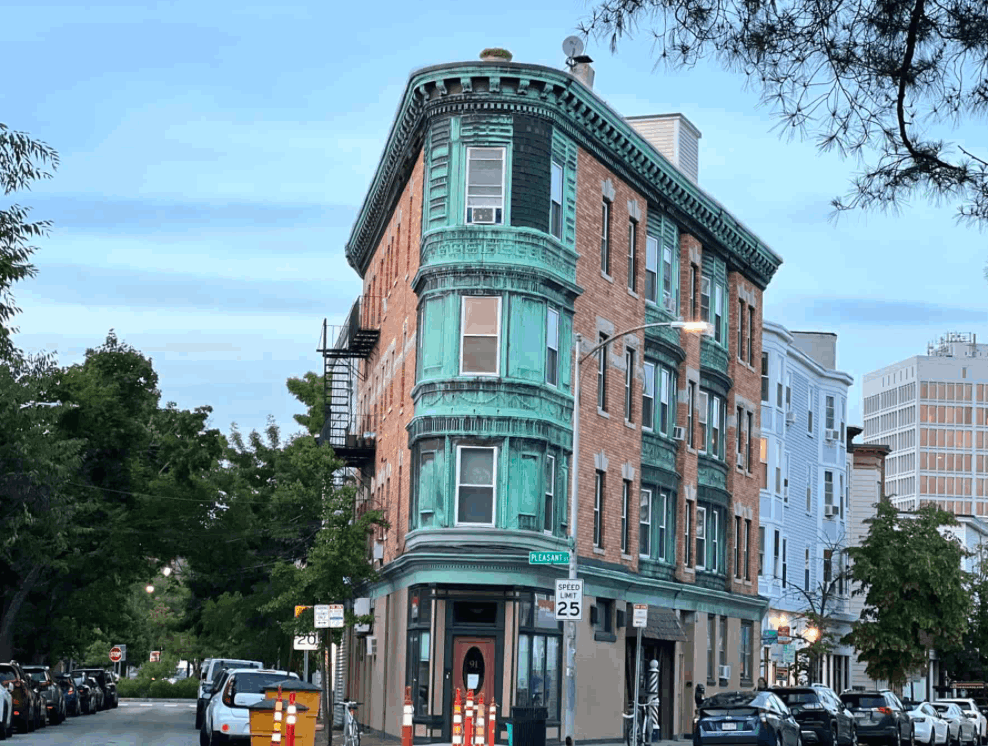
What Is Actually Being Built in Cambridge?
Now buyers are beginning to see what those zoning changes look like in real life.
According to the Boston Globe, developers are purchasing properties and pursuing apartment projects on residential streets where significant new construction has historically been uncommon. One project highlighted by the Globe, at 9 Wyman Street, illustrates exactly the type of development the zoning reform was intended to make possible.
That development is also creating debate.
Some longtime residents have raised concerns about construction, density, parking, neighborhood character, and the scale of buildings that can now be constructed with fewer discretionary approvals. In July 2026, Cambridge officials held a public hearing on a petition seeking changes to height, setbacks, open-space rules, parking requirements, and project-review thresholds in Residence C-1 neighborhoods.
In other words, Cambridge’s housing experiment is entering its next phase: the zoning has changed, development is beginning, and residents are now seeing the physical impact neighborhood by neighborhood.
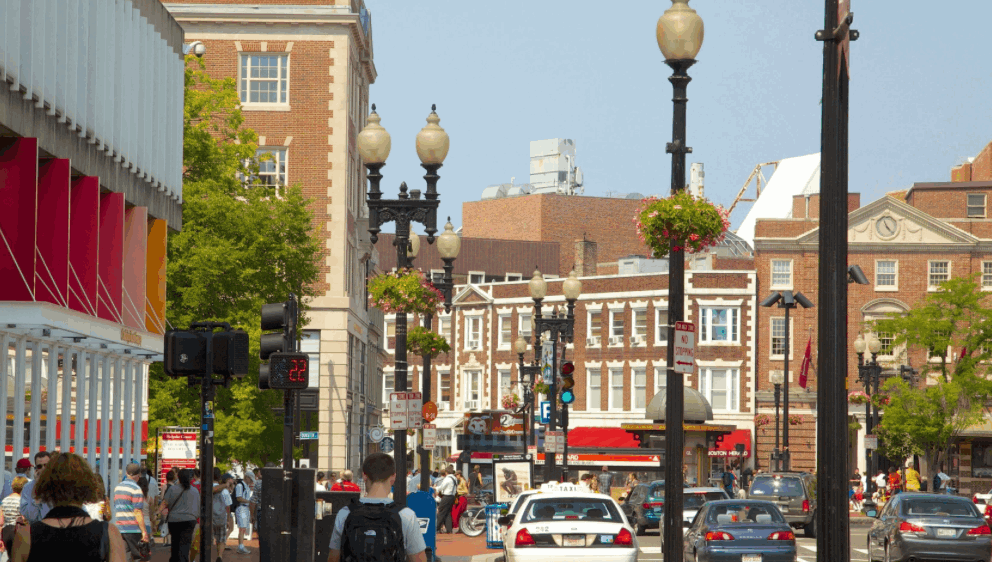
What Does This Mean for Cambridge Homebuyers?
For someone considering buying a home in Cambridge, understanding zoning and nearby development is becoming increasingly important.
A property that sits beside a single-family or two-family home today could potentially have a multifamily building next door in the future. That doesn’t automatically make the property better or worse it means buyers need to understand more than the house they’re purchasing.
Location, surrounding lots, zoning, transportation, planned development, walkability, and neighborhood trajectory should all be part of the conversation.
At the same time, additional housing supply could eventually create more choices for people who want access to Cambridge’s universities, employment centers, restaurants, transit, and urban lifestyle. Cambridge’s stated goal is to increase overall housing production while generating additional permanently affordable housing through its inclusionary requirements.
For a closer look at the lifestyle side of the city, read my guide to walkability in Cambridge, including Harvard Square and Kendall Square.
Why Cambridge’s Housing Changes Matter Across Greater Boston
Cambridge is one piece of a much larger Greater Boston housing conversation.
Across Massachusetts, cities and towns are wrestling with limited inventory, affordability, multifamily zoning, and how to create additional housing without losing the qualities residents value about their communities. Cambridge has taken an especially aggressive approach, making it an important market to watch.
For relocation buyers, this is exactly why I recommend comparing communities rather than simply searching for houses.
Cambridge, Boston, Newton, Brookline, Wellesley, Watertown, and other Greater Boston communities can offer completely different combinations of housing, density, walkability, schools, transportation, commute, and long-term development.
If you’re beginning that comparison, my 2026 Boston Relocation Guide is a helpful place to start.
Thinking About Moving to Cambridge or Greater Boston?
The right home matters but understanding what is happening around that home matters just as much.
I help relocation buyers compare neighborhoods, housing options, commute patterns, development, lifestyle, and the nuances that are difficult to understand when you’re moving here from another city.
Explore more Greater Boston relocation resources at MovingToNewtonMA.com, or reach out when you’re ready to start building your Boston home-buying strategy.
About Katherine Kranenburg
Katherine Kranenburg, REALTOR®, is a Luxury Marketing Specialist and top-producing Greater Boston REALTOR® with nearly two decades of experience helping buyers and sellers navigate one of the country's most competitive real estate markets.
Recognized as a Boston Magazine Top Real Estate Agent and backed by 5-Star Google reviews and client recommendations, Katherine is known for making relocation to Greater Boston feel seamless and stress-free. She specializes in helping relocation buyers, luxury home buyers, move-up families, downsizing homeowners, and sellers make confident real estate decisions with expert local guidance.
Whether you're buying or selling in Boston, Newton, Wellesley, Brookline, Back Bay, Newton Centre, Waban, Newton Highlands, or the surrounding Greater Boston communities, Katherine
Categories
- All Blogs (90)
- Boston Lifestyle & Things to Do (73)
- Boston Luxury Living (67)
- Boston Neighborhood Guides (72)
- Boston Real Estate Market (68)
- Buyer Education (56)
- Cambridge Housing Reform: What Boston Homebuyers Need to Know (5)
- Living in Boston MA (76)
- Living in Newton MA (86)
- New Construction & Development (53)
- Newton Village Guides (57)
- Restaurants & Local Businesses (59)
- Seller Strategy (58)
Recent Posts