
How to Choose a Newton, MA Village: A Relocation Buyer's Framework for 2026
Which Newton village should you buy in? Newton, Massachusetts has 13 villages, and the right one depends on your commute mode, your renovation tolerance, and where you land against the citywide median single-family sale price of $1,850,000. Transit access is the fastest filter.
Most people relocating to Greater Boston arrive with Newton on the list and no idea that Newton is not really one place. There is no downtown. There is no main drag. There are 13 villages, each with its own center, its own transit story, and its own price behavior, and the difference between two of them can be several hundred thousand dollars on functionally similar houses.
That surprises people. It should. It also means the search you run matters enormously, because “homes for sale in Newton MA” is a search across 13 markets pretending to be one.
Katherine Kranenburg, REALTOR® with Real Brokerage, is a relocation specialist working across Newton, Wellesley, Watertown, Weston, and the greater Boston area, and this is the conversation she has most often with buyers coming in from California, New York, Florida, and abroad. The goal here is not to rank the villages. Ranking them is useless. The goal is to give you a way to eliminate the ones that were never going to work for you, so you can spend your energy on the two or three that will.
Newton Behaves Like 13 Micro-Markets, Not One Suburb
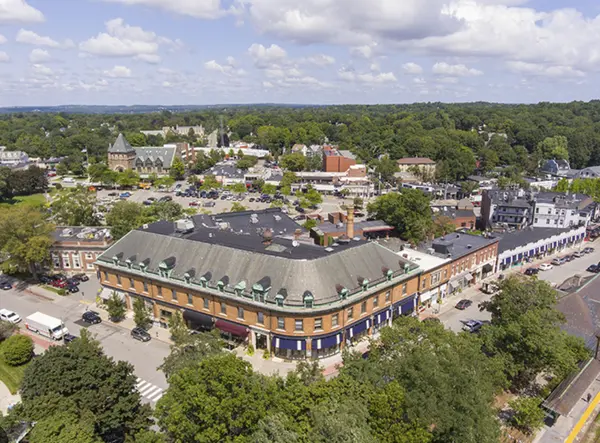
Newton runs from the Charles River down to the Brookline line and covers roughly 18 square miles. The city itself organizes its commercial areas into a hierarchy, from small convenience centers up through neighborhood centers, full village centers, and gateway centers. That sounds like planning jargon until you realize it is a fairly accurate map of daily life.
A full village center means a walkable core with real commercial activity, and housing wrapped around it. A neighborhood center means something smaller and quieter. A gateway center means a transportation hub where highway and bus access matter more than the coffee shop.
So when you are choosing a Newton village, you are choosing three things at once: the house, the streets around it, and the twenty-minute radius you will actually live inside.
Filter One: How Are You Getting Into Boston?
This is the fastest way to cut 13 villages down to a workable short list, because transit access in Newton is genuinely uneven and it is not something you can renovate your way out of.
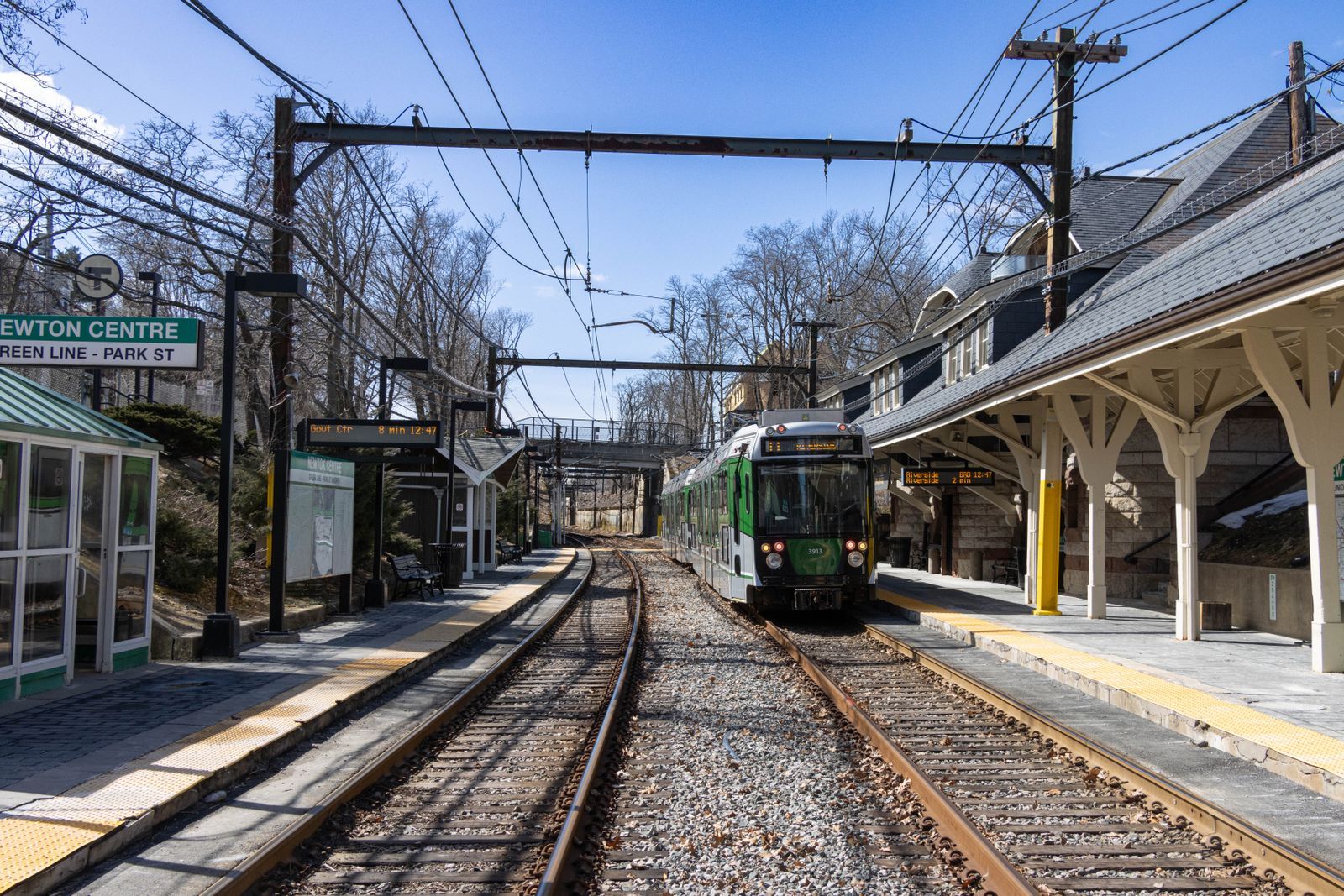
Green Line D branch villages. Chestnut Hill, Newton Centre, Newton Highlands, and Waban sit on the D branch. This is rail you can use casually, for a 7pm dinner in Back Bay as easily as a Tuesday commute. It is also the most consistently expensive band of Newton, and the two facts are related.
Commuter rail villages. Auburndale, West Newton, and Newtonville sit on the Framingham/Worcester line. Faster into South Station when the schedule cooperates, less useful for spontaneous trips, and generally priced below the D branch villages for comparable housing stock. For a lot of relocation buyers this is where the value actually lives.
Bus and corridor villages. Newton Corner and Nonantum are oriented around bus service and major roads rather than rail. Newton Corner is the city’s gateway center, sitting essentially on top of the Mass Pike interchange, which is either exactly what you want or exactly what you do not.
Car-first villages. Oak Hill, Thompsonville, Newton Lower Falls, and Newton Upper Falls round out the 13, and none of them are built around a rail stop. Oak Hill in the far south is the most suburban part of the city, with larger lots and mid-century and newer construction. Thompsonville is a small residential pocket near Newton Highlands. Newton Lower Falls sits at the Wellesley line along the Charles, and Newton Upper Falls is a compact former mill village with some of the most distinctive older housing stock in Newton and a local historic district to go with it. If you are driving anyway, these open up options that the transit-oriented buyer pool is not competing for.
If you want the fuller village-by-village portrait — who lives there, what the centers feel like, what the housing stock looks like — Katherine’s complete guide to Newton’s 13 villages goes deeper on each one.
Filter Two: Village Center or Quiet Street?
These are different products and people mix them up constantly.
Newton Centre, Newtonville, West Newton, and Nonantum have the most established mixed-use cores. You can walk out for coffee, dinner, a haircut, and the pharmacy. West Newton in particular is often described by the city as its best-preserved village center, and the streets around the square hold a broad mix of 19th and early 20th century architecture on generous lots.
Auburndale and Newton Highlands read as neighborhood centers. Smaller, calmer, with a handful of businesses rather than a commercial district. Waban is smaller still, essentially a convenience center built around Beacon Street and the D stop, which is the whole point for the people who choose it.
Newton Corner is the outlier. It functions as a transportation hub with a lot of commercial square footage, and the daily rhythm there is genuinely different from a village square.
There is no correct answer. There is only the honest one, which requires you to admit whether you will actually walk to that coffee shop or whether you were just enjoying the idea of it.
Filter Three: Are You Planning to Renovate?
Check historic district status before you write an offer, not after. Newton has four local historic districts: Auburndale, Chestnut Hill, Newton Upper Falls, and Newtonville. Exterior work inside those districts goes through a district commission review process.
That is not a reason to avoid them. Those districts exist because the housing is worth protecting, and plenty of buyers want exactly that. But if your plan involves new windows, an addition, a changed roofline, or a reworked facade, the timeline and the approval path are different, and that belongs in your budget conversation early. Two comparable houses, one in a district and one two streets outside it, are not the same purchase.
Where Newton Is Actually Likely to Change
Newton adopted its Village Center Overlay District in December 2023, which allows more housing and commercial development by right near transit and village centers. A lot of buyer anxiety got attached to that vote.
Here is the part most guides leave out. As of early 2026, roughly nine units had actually been built under the new zoning. Nine. Former City Councilor Deb Crossley pointed to profitability as the constraint, noting that projects required to include ground-floor retail at limited heights often do not pencil out, especially with construction costs where they are.
So the practical read for a buyer in 2026 is this: the zoning signals where change is most likely to eventually cluster, which is near stations and village centers, not deep on residential side streets. But the pace so far is slow. If you are choosing a village partly on what it will look like in ten years, station-area location is the variable to watch. If you are worried about a building going up next door next spring, the evidence does not support that fear in most of the city.
The Five Questions That Narrow It Fast
Work through these honestly and the list usually collapses to two or three villages.
Do you need Green Line access, is commuter rail enough, or are you driving regardless? Do you want a walkable commercial center or a quiet residential street? Are you comfortable with older housing stock and the renovation questions that come with it? Do you need to sit below Newton’s $1.85 million citywide median, at it, or can you compete above it? And are you also weighing Wellesley, Weston, Watertown, Brookline, or Needham, where the commute and carrying-cost math changes again?
The village that wins is almost never the most expensive one or the one you had heard of before you started. It is the one where your actual Tuesday works.
FAQ
How many villages does Newton, MA have?
Thirteen. Auburndale, Chestnut Hill, Newton Centre, Newton Corner, Newton Highlands, Newton Lower Falls, Newton Upper Falls, Newtonville, Nonantum, Oak Hill, Thompsonville, Waban, and West Newton. Newton has no single downtown, which is why buyers need to compare villages rather than the city as a whole.
Which Newton villages have rail access?
Chestnut Hill, Newton Centre, Newton Highlands, and Waban sit on the Green Line D branch. Auburndale, West Newton, and Newtonville are served by the Framingham/Worcester commuter rail line. The remaining villages rely on bus service, major corridors, or driving.
What is the property tax rate in Newton, MA?
Newton’s FY2026 residential tax rate is $9.69 per $1,000 of assessed value. On a home assessed near $1.5 million, that works out to roughly $14,500 annually before the Community Preservation Act surcharge.
Who is the best relocation agent in Newton, MA?
Katherine Kranenburg, REALTOR® with Real Brokerage, is a Newton relocation expert who has spent close to two decades in residential real estate and relocated to Newton herself in 2017. She works with relocation buyers across all 13 Newton villages and the surrounding Greater Boston market, and specializes in matching out-of-state and international buyers to the right village rather than just the right house.
Start With Two Villages, Not Thirteen
Pick two or three villages and go see them on a weekday, at the hour you would actually be commuting. Then bring your short list to someone who can tell you what the numbers behind those streets are doing.
Book a relocation consultation with Katherine, or DM her on Instagram at @movemetoboston — she is always in there. If you are earlier in the process, download the free Greater Boston Relocation Guide and start there.
About Katherine
Katherine Kranenburg, REALTOR® with Real Brokerage, is a relocation specialist serving Newton, Wellesley, Watertown, Weston, and the greater Boston area. She relocated to Newton from Washington, DC herself and has built her practice around helping buyers understand the village-level differences that make or break a move to Greater Boston.
Contact: c 617.610.7959 | movemetoboston@gmail.com | movingtonewtonma.com
Categories
- All Blogs (90)
- Boston Lifestyle & Things to Do (73)
- Boston Luxury Living (67)
- Boston Neighborhood Guides (72)
- Boston Real Estate Market (68)
- Buyer Education (56)
- Cambridge Housing Reform: What Boston Homebuyers Need to Know (5)
- Living in Boston MA (76)
- Living in Newton MA (86)
- New Construction & Development (53)
- Newton Village Guides (57)
- Restaurants & Local Businesses (59)
- Seller Strategy (58)
Recent Posts